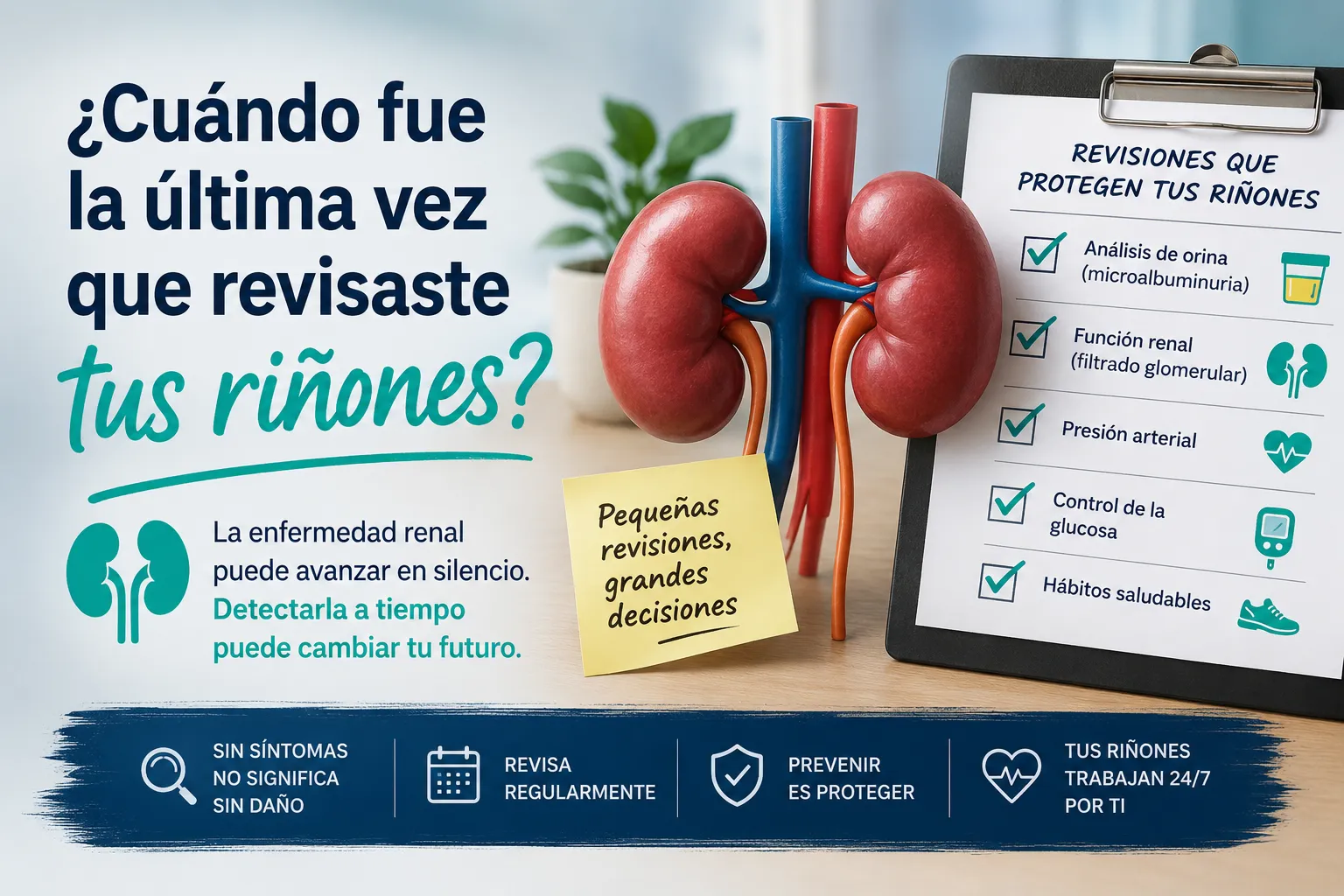

When we live with diabetes, we usually pay close attention to glucose, hypoglycemia, time in range or HbA1c.However, there is a complication that can progress for years without giving clear symptoms: chronic kidney disease.
I read a recent article that I found especially interesting because it insists on a very simple idea:protecting the kidneys should begin as soon as possible, not when there is already significant deterioration.
According to experts who have participated in an international consensus with more than 100 specialists from different countries, people with type 2 diabetes and kidney disease should not wait for serious problems to appear before acting.Even when sugar is well controlled or weight has been lost, kidney protection remains a priority.
What strikes me most is that there is more and more talk about a "global" vision of diabetes.It is no longer just about controlling glucose, but also about protecting the heart, kidneys and improving quality of life in the long term.
The article analyzes two families of medications that are gaining a lot of prominence:
* SGLT2 inhibitors (such as dapagliflozin or empagliflozin).
* GLP-1 agonists (such as semaglutide or liraglutide).
Specialists consider that SGLT2 inhibitors should be part of the basis of treatment for many people with type 2 diabetes and kidney disease, while GLP-1 agonists may provide additional benefits, especially when there is obesity, the need to lose weight or a high cardiovascular risk.
Although this article is focused on type 2 diabetes, I think it leaves an important reflection for all of us who live with diabetes, also for those of us who have type 1 diabetes:
👉 Kidneys work for us 24 hours a day.
👉 Kidney damage can develop without symptoms for a long time.
👉 Periodic check-ups, microalbuminuria, kidney function, blood pressure and glycemic control continue to be essential tools to detect problems early.
We often talk in the forum about sensors, insulin pumps or new technologies, but we must not forget that each urinalysis and each kidney check-up are investments in our future.
Do you have your kidney function checked regularly?Have they ever explained to you what values such as albuminuria or glomerular filtration rate mean?