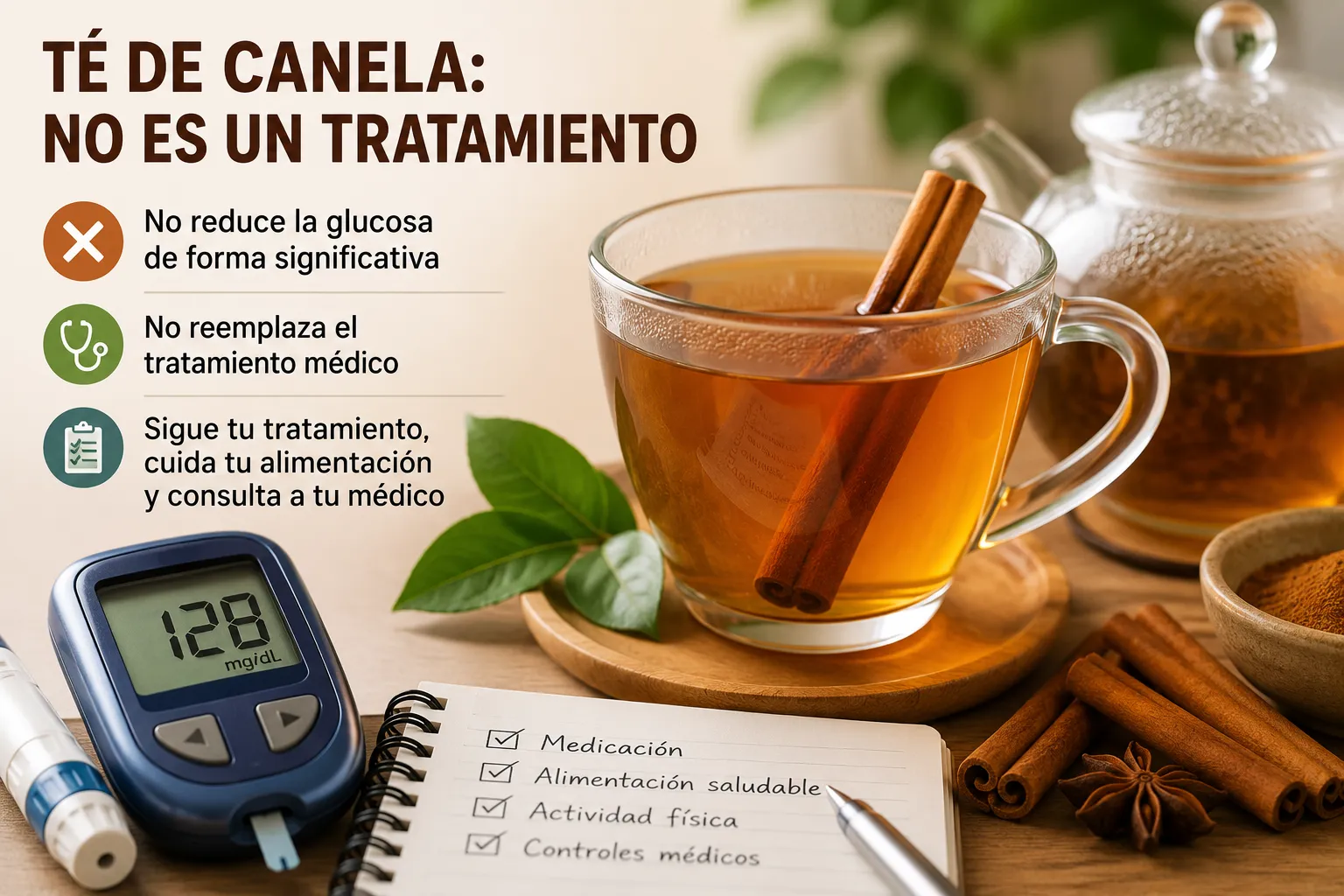

Surely you have heard more than once that cinnamon tea lowers glucose.It is one of those pieces of advice that is repeated a lot on social networks and among acquaintances, and when you live with diabetes it is normal to wonder if it can really help.
The reality is thatscientific evidence does not support that idea.
Institutions such as the Mayo Clinic, the American Diabetes Association (ADA) and Harvard Medical School agree that, although some studies have observed small improvements in glucose levels in people with type 2 diabetes, the results are modest, inconsistent and of limited quality.In other words, there is not enough evidence to recommend cinnamon tea as a treatment for diabetes.
This does not mean that drinking cinnamon infusion is bad.If you like its flavor, it can be part of a balanced diet.The problem appears when false expectations are generated and someone thinks that they can substitute medication, reduce glucose controls or neglect their diet because they are taking a "natural" remedy.
In addition, experts remember that not all cinnamon is the same.The Cassia variety, the most common in supermarkets, contains a substance called coumarin that, consumed in large quantities for a long time, can be harmful to the liver.
When we live with diabetes it is easy to be attracted to any news that promises a simple solution.We would all like an infusion, a supplement or a specific food to do the work for us.But unfortunately, there are no shortcuts.
Today, what continues to show better results is what we already know: maintaining good glycemic control, following the treatment prescribed by the medical team, taking care of your diet, doing physical activity and attending periodic check-ups.
Science continues to research new treatments and strategies, but it is also important to dispel myths.Because making decisions based on reliable information is another way to take care of our health.
Greetings,