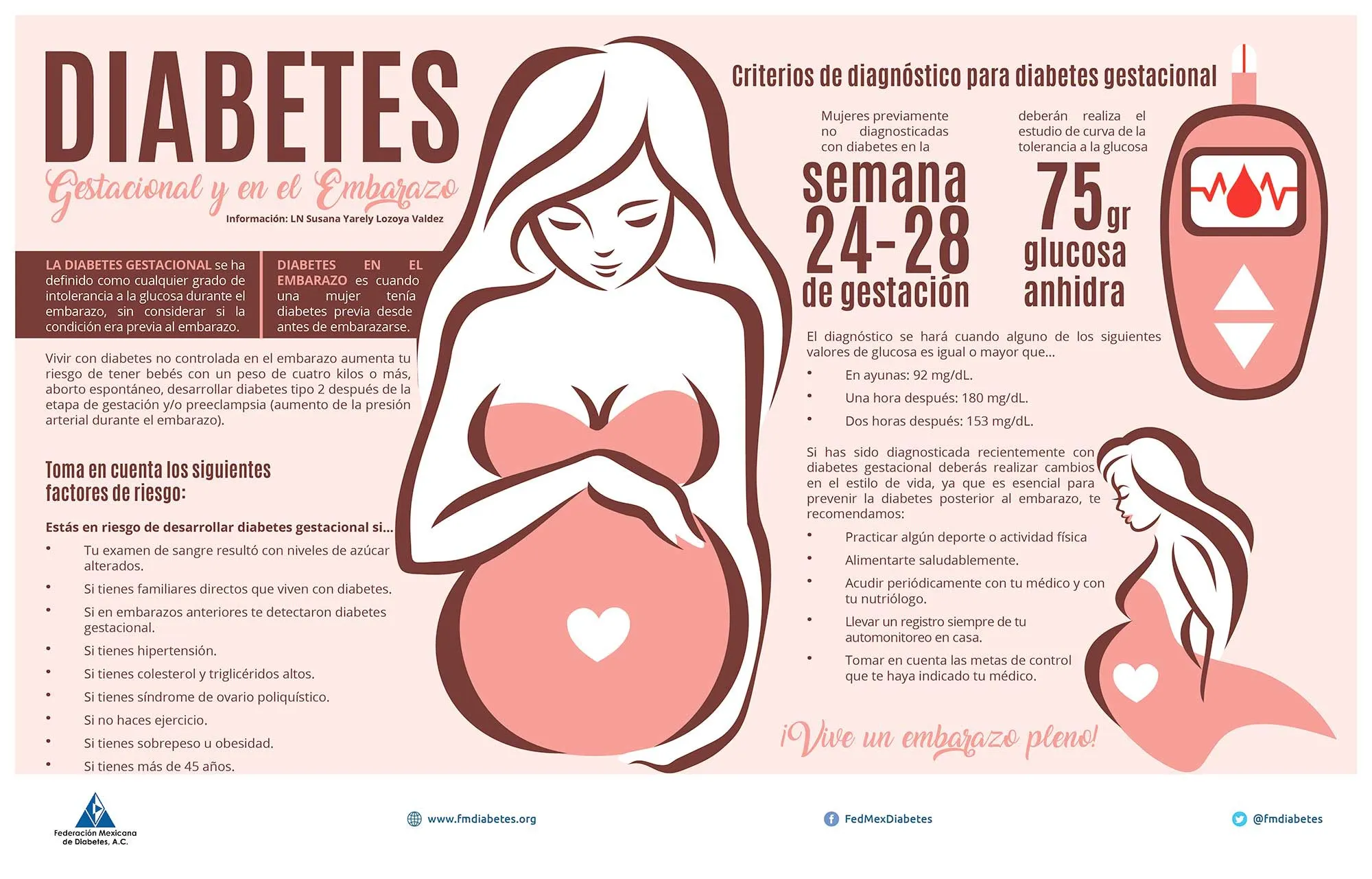

As a person who lives with diabetes, there are topics that especially touch me.One of them is pregnancy.Not only because of what it means on a medical level, but because of the enormous emotional and social burden that it entails.I carefully read the article “Diabetes technology for pregnant women with hyperglycemia in pregnancy: An opportunity to address global inequality” and, honestly, it moved me inside.
Because it talks about technology, yes.But above all it talks about inequality.And how, depending on where you are born or live, your chances of having a safe pregnancy with diabetes change radically.
Hyperglycemia in pregnancy: a much bigger problem than we think
Sometimes we think that diabetes in pregnancy is something “rare.”Nothing could be further from the truth.According to the data collected in the article, 1 in 6 births in the world occurs in women with some type of hyperglycemia during pregnancy.
Most cases correspond to gestational diabetes, but there is a smaller group—and at greater risk—made up of women with type 1 or type 2 diabetes prior to pregnancy.In these cases, control is usually more complex and, in many countries, depends largely on access to technology.
And here the problem begins.
Technology exists... but it does not reach everyone
Glucose sensors, closed loop systems, insulin pumps, continuous monitoring, structured pre-pregnancy education...
Those of us who live in countries with stronger health systems know that these tools can make the difference between a pregnancy full of complications and a much safer one.
The new European clinical consensus and endocrine societies clearly support these technologies.And, as a person with diabetes, I couldn't agree more with the potential they have.
But the article puts its finger on the sore point:
👉 More than 90% of the world's births occur in low- and middle-income countries, where regular access to insulin or basic controls during pregnancy is often not even guaranteed.
What good is a recommendation based on continuous sensors if there are no test strips?
What is the point of talking about hybrid closed-loop systems if there is no stable prenatal monitoring?
Adapting is not lowering the level: it is doing justice
There is a phrase from the article that seems key to me and that connects a lot with the spirit of this forum:
Adapting to local resources is not lowering quality, it is the path to equity.
As a person with diabetes, I know that not all solutions have to be “state of the art” to be useful.Sometimes the most transformative thing is:
reliable access to insulin,
clear and continuous education,
simple control protocols,
trained professionals,
and royal accompaniment.
The article argues that technology should reach everyone... but in the meantime, we must build bridges, not leave millions of women out of the system because they cannot comply with guidelines designed only for rich countries.
The role of FIGO and the most realistic models
A particularly interesting part is the role of FIGO (International Federation of Gynecology and Obstetrics), which already in 2015 proposed global guidelines taking into account different levels of resources.
This includes very sensible ideas:
shared care models with community staff,
progressive introduction of technology (e.g. occasional use of sensors),
integration of diabetes control into primary care,
and training adapted to the real context of each country.
As a community of people with diabetes, this approach resonates a lot with us: we don't all start out the same, but we all deserve to reach the same destination.
What I miss... and what we can learn
The article criticizes – rightly – that the new international guides barely take this global reality into account.And that is a missed opportunity.
But it is also a call to action:
👉 we need recommendations that put equity at the center, not as a footnote.
And here I link to something very ours, very much from the forum.
The strength of community: when knowledge is shared
Many of the things that the article proposes—education, accompaniment, continuity, emotional support—we already experience here every day.People with diabetes helping other people, couples learning together, mothers sharing fears and solutions.
That spirit is what the book “Living with Diabetes: The Power of the Online Community” captures so well.It is not a technical book, it is a human book.It speaks precisely about this: about how not everything depends on technology, but rather on feeling accompanied, understood and supported.
If you have diabetes and are thinking about becoming a mother, if your partner lives with diabetes, or if you simply want to better understand what it entails... this book can make a difference.For yourself or as a gift to someone close.
Furthermore, with each purchase you are helping this forum continue to exist, without advertising and at the service of the community, something that today is also a form of equity.
To finish…
This article reminded me of something fundamental:
👉 Technology saves lives, but only when it reaches those who need it.
In the meantime, shared information, mutual support and community continue to be extremely powerful tools.Let's keep using them.Let's keep talking.Let's continue accompanying each other.
Because living with diabetes—and even more so during pregnancy—shouldn't depend on your ZIP code.
A hug to each and everyone.💙